 Team Bull Trading
The expensive false belief is: if you cannot sit in a trading room all day, a live trading community is useless. That belief makes busy people choose between two bad options: either they skip structured learning entirely, or they join a room and try to keep up like a full-time screen watcher.
The better belief is: a busy trader should not use a live room as a full-day feed. They should use it as a focused observation window. The named mechanism is the 90-minute fit window.
Team Bull Trading publicly positions itself as a trading community with a trading floor and live voice trading sessions. Visible offers include Jdun monthly at $99/month, Jdun yearly at $999/year, and Grizzly at $99/month. Public rating data at research time shows 4.7 from 474 ratings, with 87% five-star and 5% one-star ratings.
Trading involves risk. A live room can add context, structure, and observation, but it cannot make the market predictable or remove the need for your own risk rules.
Table of contents
- The busy trader problem
- Why all-day watching is the wrong test
- The 90-minute fit window
- What to capture during a session
- What to ignore
- The weekly routine
- Monthly versus yearly for busy traders
- Internal links for deeper evaluation
- FAQ
- Final decision rule
The busy trader problem
Busy traders do not fail because they lack more tabs. They fail because trading attention leaks into the rest of the day.
A person with a job, family, classes, clients, or fixed obligations cannot treat every market hour as equally important. If they try, the subscription becomes a guilt machine. They pay for the room, miss sessions, open Discord late, scroll old messages, feel behind, and then take a trade for the wrong reason: not because the setup is clear, but because they feel they need to justify the subscription.
That is the wrong way to use any live trading room.
For a busy trader, the product has to pass a different test. It is not “Can I consume everything?” The test is “Can this room improve the quality of the limited trading time I actually have?”
That means you should judge Team Bull around attention quality, not total content volume.
A busy trader needs a room to help with three things:
- Faster context building.
- Cleaner risk thinking.
- Better post-session review.
If a room does those, it can be useful even when you are not present every minute. If it does not, more access simply becomes more noise.
Related reading: What Makes a Trading Floor Useful? and Live Voice Trading Sessions: How to Listen Without Blindly Copying.
Why all-day watching is the wrong test
The all-day test sounds logical. You pay for a live community, so you assume you should be present as much as possible. But in trading, more exposure can create worse decisions.
All-day watching can create:
- Fatigue.
- FOMO.
- Overtrading.
- Copying without context.
- Revenge trades after missing a move.
- Confusion from too many opinions.
- A false sense that activity equals progress.
The point of a trading floor is not to turn you into a surveillance camera. The point is to expose you to a process you can study. If you are busy, your job is to select a smaller observation window and make that window count.
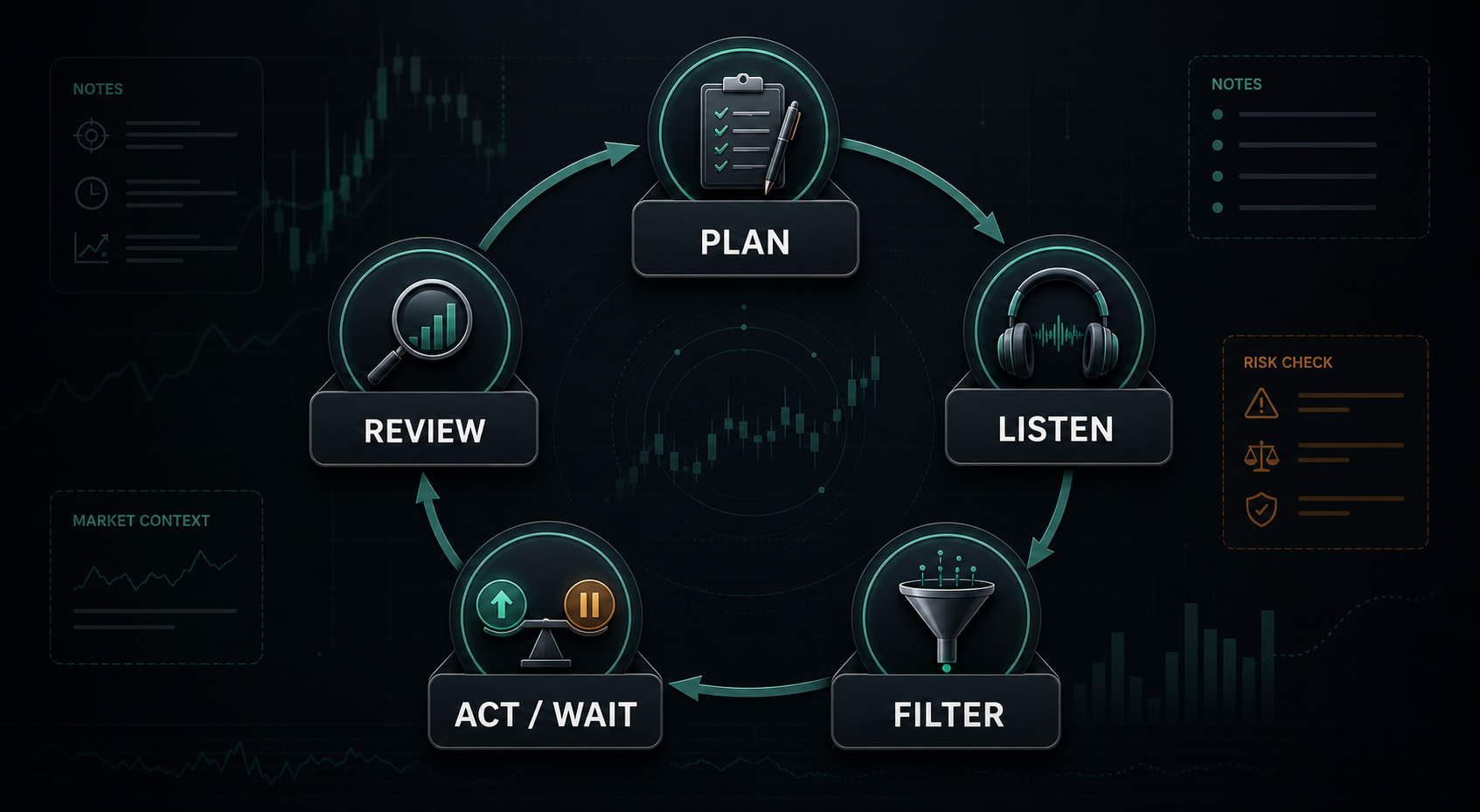
A good observation window has a beginning, middle, and end. Before the session, you know what you are watching for. During the session, you write down the reasoning, not just the callout. After the session, you review what happened and what you understood.
That is different from lurking.
Lurking is passive. Observation is active.
The 90-minute fit window
The 90-minute fit window is simple: for the first month, choose a recurring block of up to ninety minutes when you can realistically use Team Bull.
Do not choose an ideal schedule. Choose the schedule you will actually keep.
The block should include three phases:
1. Pre-session scan: ten to fifteen minutes. 2. Live observation: forty-five to sixty minutes. 3. Post-session notes: fifteen to twenty minutes.
The pre-session scan is where you write your own expectation before listening to anyone else. What is the broad market condition? What are the obvious levels? What would invalidate your idea? What is your maximum risk for the day?
The live observation is where you listen for reasoning. Do not reduce the room to entries. Track what is said before the trade, during the trade, and after the trade.
The post-session notes are where the value compounds. Write what you learned, what confused you, what you would ask next time, and whether the room made your own decision-making cleaner or more emotional.
What to capture during a session
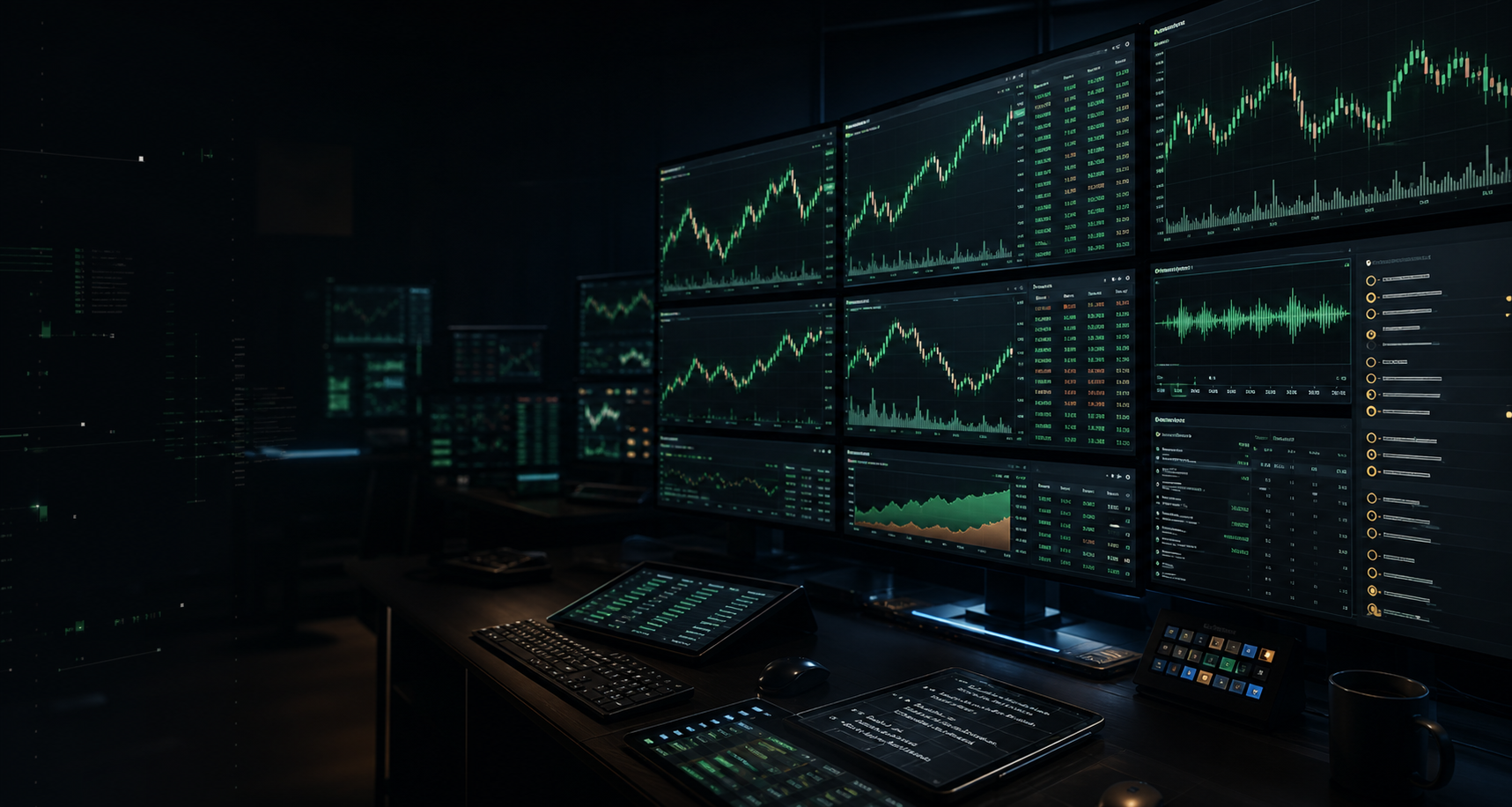
Capture the reasoning layer.
Do not write only “long here” or “short there.” That kind of note trains dependency. It also becomes useless after the chart moves on.
A useful note sounds like this:
- Bias before entry.
- Level or condition being watched.
- Reason the trade is being considered.
- Risk point or invalidation.
- What changed during the trade.
- How the trade was managed.
- What lesson remains after the outcome.
Outcome is not enough. A losing trade can contain disciplined reasoning. A winning trade can contain bad behavior. If you are using Team Bull as education, the reasoning layer matters more than the green or red result of a single idea.
This is why busy traders can still use a room well. They do not need every minute. They need enough clean samples to study process.
What to ignore
Ignore anything that makes you more impulsive.
That includes old callouts, victory chatter, emotional comments, screenshots without context, and any message that makes you feel late. If you arrive after a move, the trade is gone. Your job is not to chase the ghost of the setup. Your job is to understand why the setup existed.
Ignore the idea that your subscription must be recovered quickly. That thought is dangerous. It turns education cost into trading pressure.
Ignore yearly savings until monthly fit is proven. Jdun yearly at $999/year can make sense for someone who already knows they will use the room. For a busy trader still testing fit, the $99/month offer is the cleaner diagnostic.
Ignore anyone who treats trading as simple because it happened to work that day. Markets punish that mindset eventually.
The weekly routine
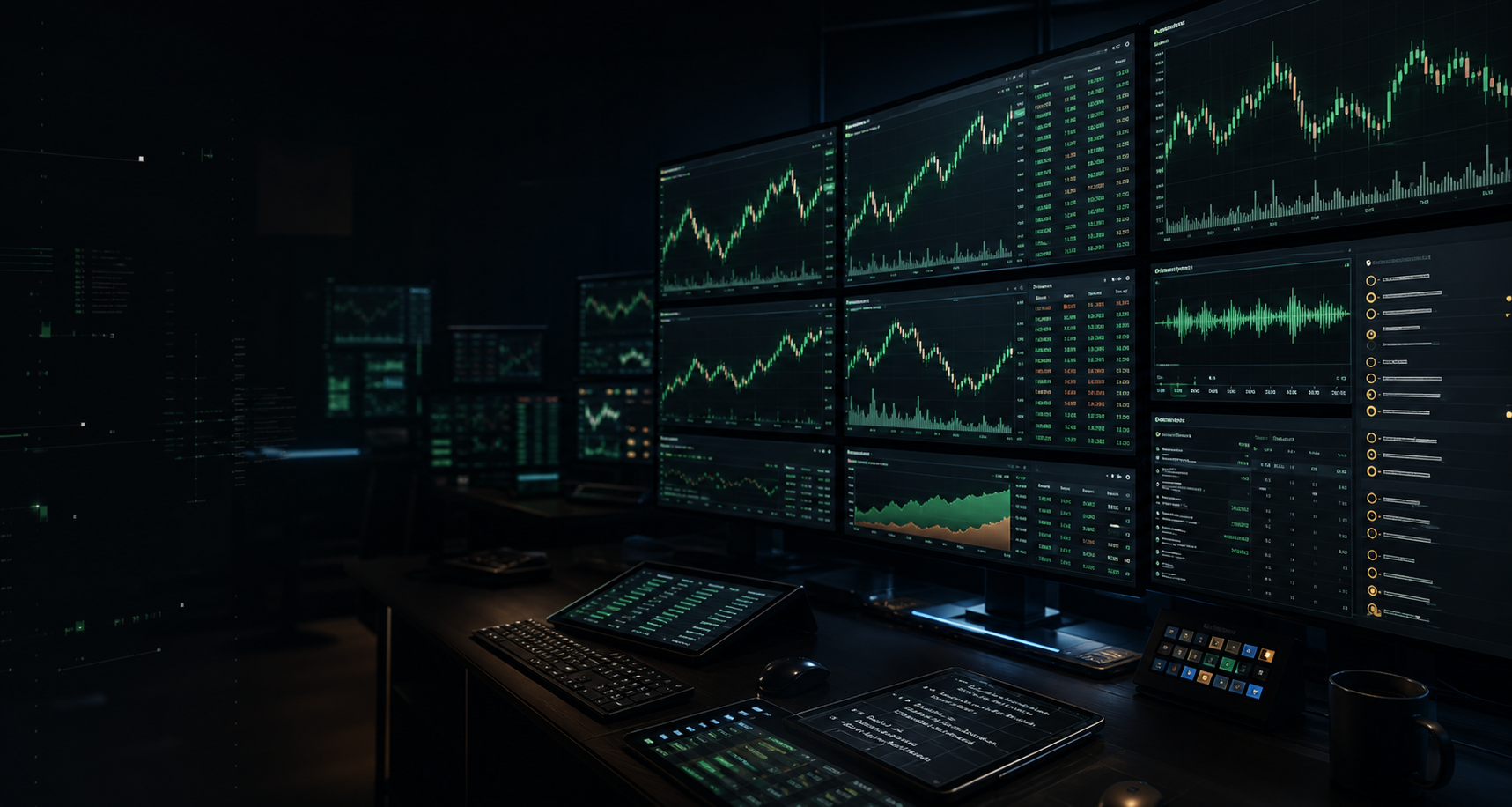
A busy trader should judge the first month by weeks, not vibes.
Week one: observe only. Learn the room rhythm. Find the best time block. Do not judge the product by one session.
Week two: write structured notes. Track reasoning, levels, risk language, and how you react emotionally.
Week three: compare your pre-session view to what you heard in the room. The question is not “Who was right?” The question is “Did this make my own market reading sharper?”
Week four: decide whether the subscription has a repeatable role. If yes, keep testing or consider longer commitment later. If no, cancel without drama.
This routine turns Team Bull from a feed into a tool. Tools can be evaluated. Feeds just consume attention.
Monthly versus yearly for busy traders
For busy traders, monthly first is usually the more rational path.
The yearly offer can reduce average monthly cost only if you stay long enough and use it enough. If you are not sure whether your schedule supports consistent attendance, yearly turns uncertainty into a larger upfront bet.
Ask three questions before yearly:
- Did I use the room at least three weeks out of four?
- Did it improve my process, not just my excitement?
- Would I still use it during a boring or losing month?
If the answer is no, monthly remains the cleaner structure.
Related reading: Team Bull Monthly vs Yearly and Team Bull Trading Cost Calculator.
Internal links for deeper evaluation
Use these next depending on what you are deciding:
- For offer fit: Jdun vs Grizzly.
- For expectations: Before You Buy Team Bull.
- For risk from negative reviews: Complaints and 1-Star Reviews.
- For total proof: Team Bull Trading Review.
FAQ
Is Team Bull useful if I work full-time?
It can be, if you use it as a focused observation window instead of trying to watch everything. The first month should test whether the schedule works.
Should I copy trades if I only have limited time?
No. Limited time makes copying more dangerous because you may miss context, risk language, or invalidation.
Which offer should busy traders start with?
The monthly offer is usually the cleaner first test because it limits the cost of schedule mismatch.
What should I measure in the first month?
Measure attendance, note quality, emotional control, and whether the room improves your own decision-making process.
Final decision rule
If you can give Team Bull one focused 90-minute window several times per week, inspect the Jdun monthly offer here: https://whop.com/team-bull-trading/team-bull-trading?a=digitalartlab
If you cannot protect even that window, do not buy yearly yet. Read Before You Buy Team Bull first.
Trading involves risk. Use any trading community for education and process review, not certainty, trade copying, or personal financial advice.