 Team Bull Trading
The expensive false belief is: readiness means wanting access. That belief is what makes traders buy subscriptions while their process is still vague. They confuse urgency with preparation.
The better belief is: readiness means you know what job the room is supposed to do for you. The named mechanism is the buyer readiness checklist.
Visible facts at research time: Team Bull Trading shows a 4.7 rating from 474 ratings. Visible offer pages show Jdun monthly at $99/month, Jdun yearly at $999/year, and Grizzly at $99/month. Public page language points toward a trading community, trading floor, and live voice trading sessions.
Trading involves risk. These questions do not predict your results. They are here to stop vague buying.
Table of contents
- Why readiness matters
- The wrong reason to buy
- The 21 questions
- How to score yourself
- What green flags look like
- What red flags look like
- Which offer matches your readiness
- Where to go next
- FAQ
- Final decision rule
Why readiness matters

A trading subscription is not just a payment. It is an agreement with your own behavior.
If you join Team Bull while expecting certainty, the room will be judged against an impossible standard. If you join while emotionally pressured, the first losing idea can feel personal. If you join with no schedule, no note habit, and no risk rules, even useful sessions can turn into background noise.
Readiness matters because the same room can be experienced in two totally different ways.
One buyer listens for process, writes down reasoning, respects invalidation, and treats the month as a test. Another buyer waits for entries, reacts late, copies without context, and blames the room when their own execution breaks. The product may be identical. The readiness is not.
This article is not here to make everyone buy. It is here to route the right buyer to the right commitment.
Related reading: Team Bull Trading Review and Team Bull Complaints and 1-Star Reviews.
The wrong reason to buy

The wrong reason to buy is emotional rescue.
If you are buying because you had a bad week, lost discipline, missed a move, or feel behind other traders, slow down. A live room can give structure, but it cannot fix emotional dependency. In fact, live commentary can make dependency worse if you treat it as permission to avoid your own plan.
Other wrong reasons:
- You want someone to remove uncertainty.
- You want to copy without thinking.
- You want a subscription to force discipline.
- You want the yearly plan because it feels like commitment.
- You believe a
4.7rating removes buyer risk. - You are using rent, debt, or emergency money.
None of those are readiness signals.
A better reason is specific: “I want to study how a more experienced trader frames the day, manages risk, reacts to invalidation, and reviews trades.”
That reason gives the room a job.
The 21 questions

Answer these before clicking any Whop checkout.
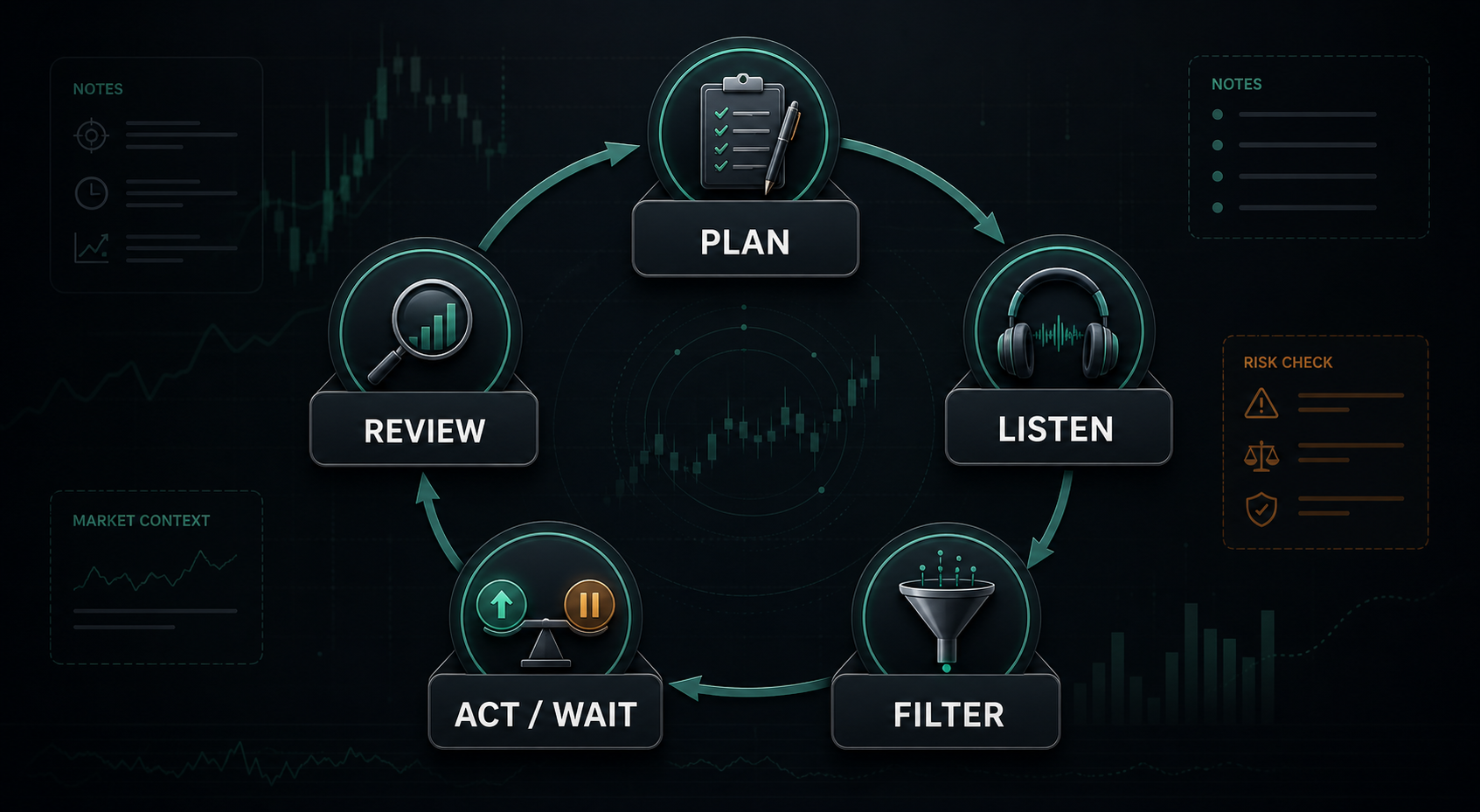
1. What exact problem am I trying to solve? 2. Is that problem education, accountability, market context, or loneliness? 3. Can a live room actually solve it, or do I need a basic course first? 4. Do I already know my maximum risk per trade? 5. Do I know my maximum risk per day? 6. Do I have a rule for when I stop trading? 7. Can I watch sessions without copying blindly? 8. Can I take notes while listening? 9. Do I know what time block I can use consistently? 10. Can I afford $99/month without needing it to pay me back quickly? 11. Am I considering $999/year because fit is proven or because I want to feel committed? 12. What would make me cancel after month one? 13. What would make me stay after month one? 14. Would I still value the room during a slow market week? 15. Would I still value the room after hearing a losing trade reviewed honestly? 16. Am I prepared to be bored sometimes? 17. Do I know whether I prefer Jdun or Grizzly style, or do I need to research both? 18. Have I read the rating split, including the one-star share? 19. Am I willing to read current Whop reviews myself? 20. What bad habit do I want this room to expose? 21. What decision will I make at the end of the first month?
If you cannot answer most of these, the problem is not the product page. The problem is your buying process.
How to score yourself
Give yourself one point for each question you can answer clearly.
Do not give points for vague answers. “I want to get better” is not clear. “I want to observe live risk management and write notes for four weeks” is clear.
Score bands:
- 0 to 7: not ready.
- 8 to 14: monthly test only.
- 15 to 18: monthly test with clear evaluation criteria.
- 19 to 21: ready to compare monthly, yearly, and mentor fit.
The point is not to gamify the purchase. The point is to make your thinking visible.
If you score low, do not force the buy. Read Jdun vs Free Trading Content and Disciplined Trading With Team Bull first. You may need a note routine before you need a subscription.
What green flags look like

Green flags are behavioral, not emotional.
A ready buyer says:
- “I can use this three times per week.”
- “I know when I will cancel.”
- “I am watching for process.”
- “I will not copy without context.”
- “I can afford the month even if I do not trade.”
- “I understand reviews are not guarantees.”
- “I have a written risk rule.”
That buyer can inspect Team Bull fairly. They are less likely to turn every session into a pressure test.
Readiness also means being able to hear caveats. If an article says trading involves risk and your reaction is irritation, that is a warning. The caveat is not there to kill the sale. It is there because the market does not care how excited a buyer is.
What red flags look like
Red flags sound like urgency.
- “I need this to work fast.”
- “I just need someone to tell me what to trade.”
- “I lost money and need a better room.”
- “The yearly plan will make me serious.”
- “If the rating is high, I should be fine.”
- “I do not have time for notes.”
- “I only care about entries.”
If that is your current state, wait. The worst time to buy a trading product is when you are trying to outsource your emotional control.
Which offer matches your readiness
If you are not sure about fit, monthly is the cleaner first move. Jdun monthly is visible at $99/month. That lets you test the room without turning uncertainty into a larger annual commitment.
If you already know you fit Jdun's style, can attend consistently, and have a real review process, yearly can be compared because $999/year is lower than twelve separate $99 months. But that math only matters if usage is real.
If you are comparing mentor style, read Jdun vs Grizzly before choosing.
Where to go next
Start with the review: Team Bull Trading Review.
Then check the pricing logic: Monthly vs Yearly.
Then check fit risk: Complaints and 1-Star Reviews.
Then compare alternatives: Team Bull Alternatives.
FAQ
Should beginners buy Team Bull?
Only if they are willing to observe, take notes, and avoid blind copying. Beginners who want simple signals should pause.
Should I buy monthly or yearly first?
Monthly is the cleaner first test when fit is unproven. Yearly should come after proof of usage.
What is the biggest readiness sign?
A written plan for how you will use the first month.
What is the biggest warning sign?
Buying because you feel desperate to recover losses or catch up.
Final decision rule
If you can answer at least fifteen of the questions clearly, inspect the Jdun monthly offer here: https://whop.com/team-bull-trading/team-bull-trading?a=digitalartlab
If you cannot, keep researching. A better buyer makes a better decision.
Trading involves risk. Treat Team Bull as education and process observation, not personal financial advice or a promise of results.