 Team Bull Trading
The expensive false belief here is: the yearly plan is automatically smarter because it is cheaper over twelve months. That belief is not completely wrong; it is incomplete. The yearly price can be cheaper on paper. But trading education is not a passive subscription. If you do not use the room, if the style does not fit, or if live commentary makes you more reactive, the annual discount is irrelevant.
The better belief is: the yearly plan is smarter only after you have evidence that you will use the room long enough and well enough. The named mechanism is the commitment break-even test.
The visible math is clean. Jdun monthly is listed at $99/month. Twelve monthly payments would equal $1,188. Jdun yearly is listed at $999/year. The difference is $189 if you stay for the full twelve months. The break-even point is just over ten monthly payments. That number matters, but it is not the whole decision.
Other visible offer facts: Grizzly is listed at $99/month; Team Bull shows a visible 4.7 rating from 474 ratings; the public description positions it as a comprehensive trading community. Pricing may change, so verify the live Whop page before buying.
Trading involves risk. Treat live trading, commentary, alerts, and community discussion as education and decision support, not a promise of profit or personal financial advice.
Table of contents
- The visible prices
- The simple math
- The break-even test
- Why monthly is often smarter first
- When yearly makes sense
- The trading-risk separation
- Decision table
- How to use the first month
- FAQ
- Final decision rule
The visible prices

The public pricing at research time is straightforward.
Jdun monthly: $99/month.
Jdun yearly: $999/year.
Grizzly monthly: $99/month.
Those numbers are enough to build a pricing decision, but they are not enough to build a trading decision. Price tells you what access costs. It does not tell you whether you will attend, understand, journal, manage risk, or fit the room.
This is where buyers make the first mistake. They treat the yearly plan like a normal software discount. If you already use a tool every day, an annual plan can be a simple savings decision. But a live trading community is different. It asks for attention, schedule fit, emotional control, and active participation.
You are not only buying access. You are buying a commitment to use access well.
That is why the decision has to start with visible price and move quickly into usage. If you are new to Team Bull, the question is not “which plan is cheaper?” The question is “which plan lets me learn the truth about fit without overcommitting?”
Related reading: Team Bull Trading Review: What You Actually Get Before Joining; Team Bull Trading Cost Calculator: Subscription, Time, and Risk.
The simple math

The simple math favors yearly if you stay the whole year.
$99 x 12 = $1,188.
$999/year is $189 less than twelve monthly payments.
That is the cleanest part of the decision. It is also the least important part for a first-time buyer.
The difference between $1,188 and $999 only matters if you would have stayed all year anyway. If you leave after one month, yearly was not a discount. If you leave after three months, yearly was not a discount. If you pay yearly because you like the idea of being committed but then do not show up, yearly was not a discount.
The annual plan rewards proven usage. It punishes imagined usage.
This is not anti-yearly. It is anti-fantasy. A buyer who has tested the room, knows the schedule, likes the style, and has a routine may reasonably prefer yearly. A buyer who has only read the public page should be careful. The public page cannot tell you how the room will feel inside your actual week.
The break-even test
The break-even test is simple: would you confidently use the membership for more than ten months?
If yes, yearly may deserve a look.
If no, monthly is cleaner.
But confidence should be earned. It should not come from excitement, reviews, or the desire to force yourself into discipline. A yearly plan can feel like commitment. Sometimes it is only pressure with a better label.
Ask yourself:
- Have I used the room before?
- Do I know when I will attend?
- Do I know how I will take notes?
- Do I know what problem the room solves for me?
- Would I still want the room after a flat or losing month?
- Am I buying yearly because of evidence or emotion?
If those answers are weak, the break-even test fails.
The monthly plan exists for discovery. Discovery has value. Paying slightly more month-to-month can be cheaper than buying a year of something you do not use.
Why monthly is often smarter first

Monthly is often smarter first because the main risk is fit, not price.
Fit includes schedule fit. Can you attend live sessions or meaningfully use the room around your day? Fit includes teaching style. Does the commentary make you clearer or more reactive? Fit includes experience level. Are you able to understand what is being discussed? Fit includes emotional response. Do you treat live voice as context or permission?
You cannot solve those from outside.
The first month should answer questions annual pricing cannot answer:
- Did I actually show up?
- Did I take better notes?
- Did I hear risk discussed in a useful way?
- Did the room help me sit out when needed?
- Did I become more disciplined or more impulsive?
- Did I know what to review after sessions?
If the first month gives strong answers, the yearly plan can be reconsidered. If it does not, cancelling monthly is a clean exit.
That exit has value. Buyers underestimate the value of being able to leave after a real test.
When yearly makes sense
Yearly makes sense after proof of fit.
Not proof that you will make money. Proof that the membership belongs in your learning routine.
The yearly buyer should be able to say:
“I have used the room. I know the schedule works. I know the style helps me think. I know how I take notes. I know what problem it solves. I would keep using it even if one month did not produce exciting outcomes.”
That is a solid annual-plan sentence.
Yearly can also make sense for buyers who value fewer billing decisions and already know the room is part of their year. But again, the key word is already. Annual pricing should not be used to create commitment from nothing.
If you are trying to force yourself to become disciplined by paying upfront, pause. Discipline created by pressure often turns into resentment. Build the weekly routine first. Then decide whether yearly is the cheaper way to keep a routine you already have.
The trading-risk separation
Do not merge subscription savings with trading outcomes.
Saving $189 across a year is a subscription math point. It is not a trading point. It does not reduce market risk. It does not make a setup better. It does not make live commentary safer. It does not guarantee that the membership will pay for itself.
Keep the buckets separate:
- Subscription cost.
- Time cost.
- Attention cost.
- Trading capital risk.
- Emotional risk.
A clean buyer can pay for education without needing the next trade to justify the subscription. A pressured buyer starts making the room responsible for outcomes it cannot control.
That is why the pricing decision should happen before trading emotion is involved. If you are buying because you are frustrated, down, bored, or desperate, wait. Pricing math cannot fix emotional timing.
Related reading: Team Bull Trading Cost Calculator: Subscription, Time, and Risk; Risk Management Lessons to Look For in a Trading Community.
Decision table
Choose monthly if:
- You are new to Team Bull.
- You have not tested the room.
- You are unsure about schedule fit.
- You need to compare Jdun and Grizzly.
- You want a clean exit after a real test.
- You are still building a trading routine.
Choose yearly if:
- You already know Jdun fits.
- You have used the monthly path or have strong prior fit evidence.
- You can describe exactly how you will use it weekly.
- You are comfortable with the upfront cost.
- You are not using yearly to force discipline.
- You understand the discount is not a trading promise.
Wait if:
- The price creates pressure.
- You want guaranteed outcomes.
- You do not know what problem you need solved.
- You are trying to recover losses.
- You cannot commit time to use the membership.
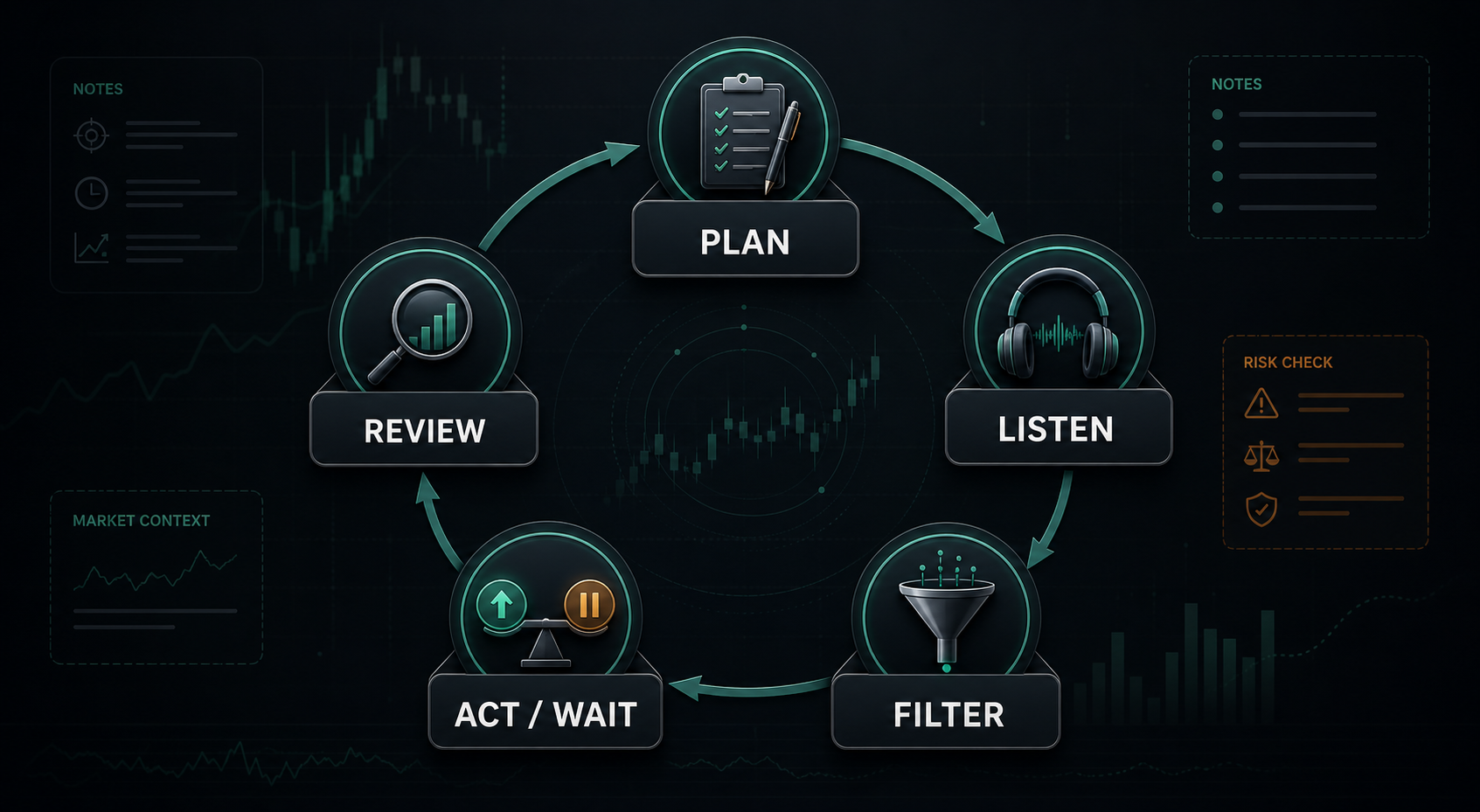
How to use the first month
A first month should have a plan.
Do not simply join and drift. Define the test before paying.
Week one: observe. Learn the room’s rhythm. Do not judge by one session.
Week two: take structured notes. Track thesis, risk, invalidation, and your emotional response.
Week three: compare what you hear against your own plan. Practice sitting out.
Week four: review the month. Did the room improve your process? Did it create better notes? Did it make risk clearer? Did it make you more disciplined or more reactive?
That review decides whether you continue monthly, consider yearly, compare Grizzly, or leave.
FAQ
Is yearly cheaper than monthly?
If you stay twelve months, yes. $99/month for twelve months is $1,188; the visible yearly price is $999, a $189 difference.
Should beginners choose yearly?
Usually no. Beginners should test fit first unless they have a strong reason to commit.
Does yearly mean better value?
Only if you use it. An unused yearly plan is not better value than a monthly test.
Should I compare Grizzly before yearly?
If you are choosing between live-trading paths, yes. Grizzly is visible at $99/month, so the comparison is about fit, not only price.
Final decision rule
Use this sentence:
“I will choose monthly to discover fit, and only choose yearly after fit is proven.”
If you are still testing, inspect the monthly Jdun offer here: https://whop.com/team-bull-trading/team-bull-trading?a=digitalartlab
If fit is already proven and the longer commitment makes sense, inspect the yearly offer here: https://whop.com/team-bull-trading/team-bull-yearly?a=digitalartlab
If you need the broader review first, read Team Bull Trading Review: What You Actually Get Before Joining.
Trading involves risk. Treat live trading, commentary, alerts, and community discussion as education and decision support, not a promise of profit or personal financial advice.