 Team Bull Trading
The expensive false belief is: the subscription price is the cost. That belief makes traders compare $99/month to $999/year as if the only question is arithmetic.
The better belief is: the real cost is price plus usage plus decision pressure. The named mechanism is the true monthly cost test.
Visible offer facts at research time: Jdun monthly is listed at $99/month, Jdun yearly at $999/year, and Grizzly at $99/month. Public rating data shows Team Bull Trading at 4.7 from 474 ratings, with a visible split including 87% five-star and 5% one-star.
Trading involves risk. The math in this article evaluates subscription commitment, not trading returns. Do not buy any trading subscription because you expect it to pay for itself.
Table of contents
- The simple math
- The true monthly cost test
- Cost per useful session
- The pressure problem
- When yearly makes sense
- When monthly makes sense
- Jdun versus Grizzly cost logic
- The cancellation rule
- FAQ
- Final decision rule
The simple math

The visible simple math is straightforward.
Jdun monthly at $99/month costs $1,188 over twelve separate months.
Jdun yearly at $999/year is $189 less than twelve monthly payments.
Grizzly monthly is visible at $99/month, so the same monthly logic applies there.
That is the easy part. The mistake is stopping there.
A yearly plan is cheaper only if you use it long enough and still want the access after the test period. If you cancel mentally after two months but paid for twelve, the annual discount did not save money. It made the mistake quieter.
The useful question is not “Which price is lower?” It is “How much useful attention will I actually convert from this subscription?”
Related reading: Team Bull Monthly vs Yearly and Team Bull for Busy Traders.
The true monthly cost test

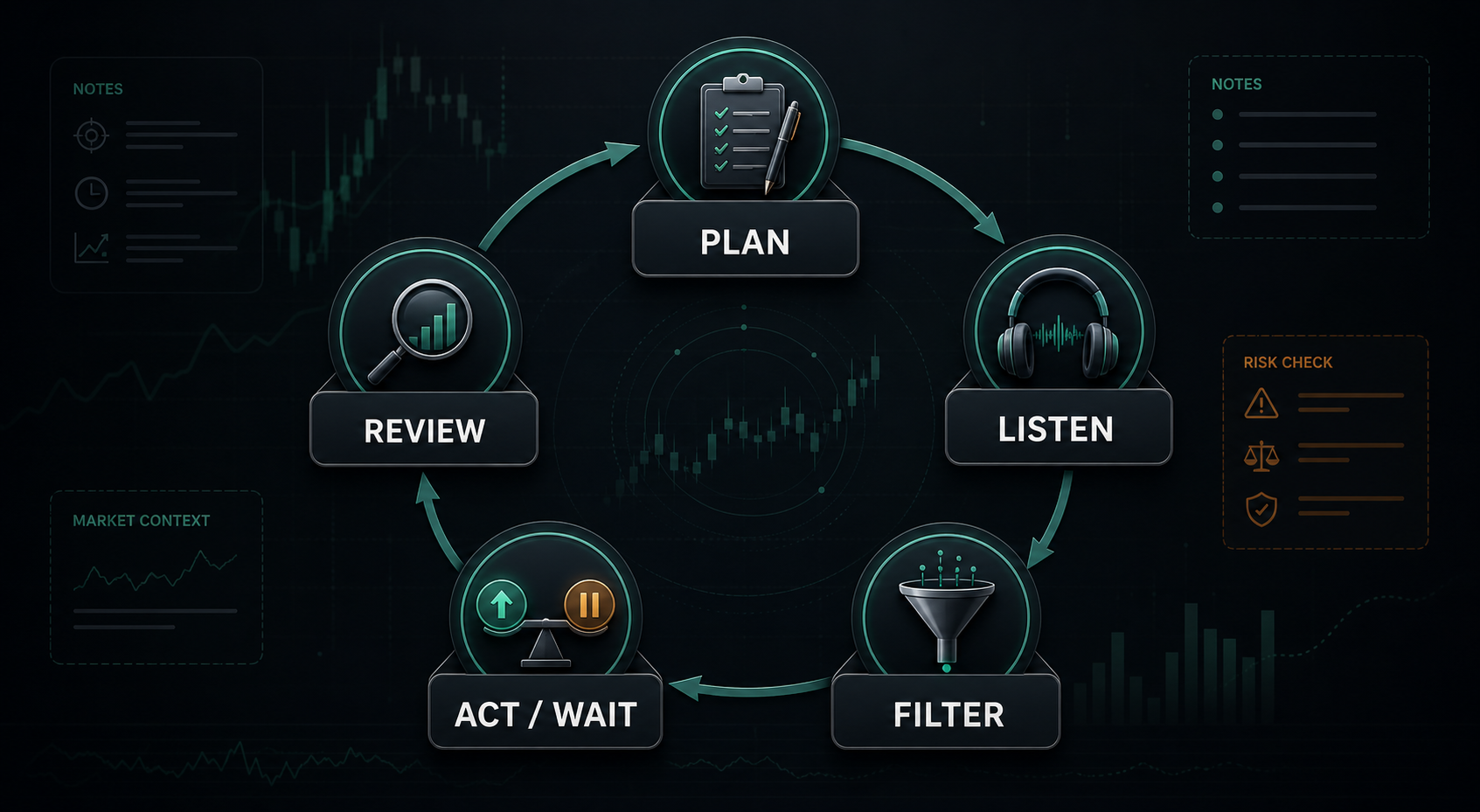
The true monthly cost test has four inputs:
1. Price paid. 2. Sessions used. 3. Notes produced. 4. Pressure created.
Most buyers only calculate the first input. Serious buyers calculate all four.
Price paid is obvious. Sessions used tells you whether the product fits your schedule. Notes produced tells you whether the room is becoming learning material or background noise. Pressure created tells you whether the subscription is making you trade worse.
A $99 month with eight focused sessions and eight clear notes may be useful. A $99 month with twenty hours of distracted lurking may not be. A $999 year can be rational for a committed user and irrational for someone hoping the payment forces discipline.
The calculator is not about making the price feel cheap. It is about refusing to lie to yourself.
Cost per useful session
Cost per useful session is simple:
subscription cost / useful sessions attended = cost per useful session
A useful session is not any session you joined. It is a session where you paid attention, captured reasoning, and reviewed what happened.
Examples:
$99/ 4 useful sessions =$24.75per useful session.$99/ 8 useful sessions =$12.38per useful session.$99/ 12 useful sessions =$8.25per useful session.
For yearly:
$999/ 52 useful sessions = about$19.21per useful session.$999/ 100 useful sessions =$9.99per useful session.$999/ 150 useful sessions =$6.66per useful session.
This is why usage matters more than the headline discount.
If you are busy and realistically attend four useful sessions per month, monthly may be fine while you test fit. If you attend frequently and review seriously, yearly becomes easier to evaluate.
The pressure problem

The hidden cost is pressure.
Some traders buy a subscription and immediately expect trading to cover it. That is a bad mental contract. It turns a learning expense into a performance demand.
The thought sounds like this: “I paid $99, so I need to make that back.”
That thought can lead to:
- Oversizing.
- Taking trades outside the plan.
- Copying because you feel behind.
- Staying in a bad trade to justify the day.
- Chasing after missing live context.
The subscription should sit inside your education budget, not inside your trade target. If $99/month creates pressure, do not buy yet. If $999/year creates bigger pressure, do not use annual pricing as a commitment device.
A trading room should reduce decision chaos. If the cost increases chaos, the product is not fitting your current state.
When yearly makes sense
Yearly makes sense only after proof.
Proof means:
- You used the monthly room consistently.
- You know the mentor style fits.
- You can attend without forcing trades.
- Your notes improved.
- You understand the room's limitations.
- You would keep using it through slow weeks.
The annual math is attractive because $999/year is less than twelve separate $99 months. But the discount is not the point. Commitment is only useful when behavior already exists.
If you did not use the first month, yearly will not save you. It will hide the lack of usage for longer.
When monthly makes sense

Monthly makes sense when fit is uncertain.
Fit includes schedule fit, mentor fit, learning fit, emotional fit, and budget fit. You cannot fully know those from a product page. A visible rating of 4.7 from 474 ratings is useful proof, but it is not personal fit.
Use the first month as a diagnostic:
- Can I attend?
- Do I understand the commentary?
- Does this make me more disciplined or more impulsive?
- Do I produce notes?
- Do I know whether to stay or cancel?
Monthly is not automatically cheaper. It is more flexible. Flexibility matters when the main question is fit.
Jdun versus Grizzly cost logic
Jdun monthly and Grizzly monthly are both visible at $99/month. That means the price does not settle the choice between them.
The better comparison is style and use case.
Ask:
- Which trader's approach do I understand better?
- Which schedule fits me?
- Which communication style helps me think clearer?
- Which one matches the markets I care about?
- Which one makes me less impulsive?
Read Jdun vs Grizzly before choosing between the two.
The cancellation rule
Set the cancellation rule before buying.
A clean rule sounds like this:
“I will cancel after one month if I attend fewer than four useful sessions, produce fewer than four session notes, or feel more impulsive because of the room.”
That rule protects you from subscription drift. Subscription drift is when you keep paying because cancellation feels like admitting you were wrong.
You are allowed to test a product and leave if it does not fit.
This is especially important in trading because buyers often confuse sunk cost with commitment. The market does not reward sunk cost.
FAQ
How much does Team Bull Trading cost?
Visible offer pages show Jdun monthly at $99/month, Jdun yearly at $999/year, and Grizzly at $99/month at research time.
Is yearly cheaper than monthly?
Compared to twelve separate $99 monthly payments, $999/year is lower by $189. It only saves money if you actually use the access and would have stayed.
Should beginners buy yearly?
Usually no. Beginners should test fit monthly first unless they already have strong evidence that the room matches their process.
What is the hidden cost?
Pressure. If the subscription makes you feel like you must trade to earn it back, wait.
Final decision rule
If $99/month fits your education budget and you have a clear first-month review rule, inspect the Jdun monthly offer here: https://whop.com/team-bull-trading/team-bull-trading?a=digitalartlab
If you already know fit is proven and yearly behavior is realistic, inspect the yearly offer here: https://whop.com/team-bull-trading/team-bull-yearly?a=digitalartlab
Trading involves risk. Calculate subscription usage, not fantasy returns.