 Team Bull Trading
The expensive false belief here is: a high rating proves I will personally get a good trading outcome. That belief is tempting because it turns other people’s satisfaction into your permission slip. It makes the decision feel safer than it is.
The better belief is: a high rating is a satisfaction signal, not a personal performance forecast. The named mechanism for this article is the social proof reality check. Social proof can tell you an offer deserves inspection. It cannot tell you how you will use it, whether you will manage risk, or whether live trading will improve your behavior.
The public rating facts are useful. Team Bull Trading shows a visible 4.7 rating from 474 ratings. The visible split shows 87% five-star, 4% four-star, 2% three-star, 0.8% two-star, and 5% one-star. Those numbers are worth taking seriously. They are also worth keeping in their lane.
Visible offer facts at research time: Jdun monthly is listed at $99/month, Jdun yearly at $999/year, and Grizzly at $99/month. The public description positions Team Bull as a comprehensive trading community, and the visible FAQ prompts mention live voice trading sessions and the trading floor.
Trading involves risk. Treat ratings, reviews, live trading, commentary, and community discussion as research inputs, not proof of your future results.
Table of contents
- What the rating says
- What the rating cannot say
- Why the one-star slice matters
- How to read reviews without fantasy
- The satisfaction versus outcome split
- Questions to ask before buying
- How ratings fit the CTA
- FAQ
- Final decision rule
What the rating says

A 4.7 rating from 474 ratings says the offer has meaningful public buyer response.
That matters. It means the page is not empty. It means enough buyers have interacted with the product and left feedback for the rating to be part of the buying decision. A rating that high, across that many ratings, should make a buyer take the offer seriously.
It also tells you the product likely has strong fans. The visible 87% five-star share is not a small signal. It suggests a large majority of visible ratings are positive. If you are comparing Team Bull against a thin, unreviewed offer, that public proof matters.
But ratings answer a narrow question: how did reviewers rate their experience? They do not answer the broader question buyers often smuggle in: what will happen if I join?
That distinction is the whole article.
Use the rating as a reason to inspect. Do not use it as a reason to skip your own due diligence. The rating can move Team Bull from “random offer” to “serious candidate.” It cannot move it from “serious candidate” to “safe outcome.”
Related reading: Team Bull Trading Review: What You Actually Get Before Joining; Team Bull Trading Complaints and 1-Star Reviews: How to Read the Risk Before Buying.
What the rating cannot say

The rating cannot say whether you will trade better.
It cannot say whether you will attend live sessions. It cannot say whether you will understand the commentary. It cannot say whether you will copy without context. It cannot say whether you will journal. It cannot say whether you will manage risk. It cannot say whether the room fits your schedule or market style.
This is not a technicality. It is the difference between honest research and wishful thinking.
Trading products create a special kind of review risk because buyers want proof of outcomes. But most public ratings are experience signals. They may reflect community quality, content satisfaction, perceived value, support, personality fit, or buyer emotion. They do not verify account-level results.
Even if a reviewer says the product helped them, that claim belongs to that reviewer. It is not automatically transferable to you.
The safest sentence is: “Team Bull has visible social proof, and I should inspect the current offer carefully.”
The unsafe sentence is: “Team Bull has a high rating, so this should work for me.”
One sentence creates research. The other creates entitlement.
Why the one-star slice matters
The visible 5% one-star slice is not a reason to panic. It is a reason to think.
A high average and a visible negative slice can both be true. That is normal. A product can satisfy many buyers and disappoint some. In trading education, that split is especially important because expectation mismatch is common.
Some buyers may want signals. Some may want certainty. Some may dislike the teaching style. Some may not show up. Some may use the product badly. Some may have legitimate complaints. The public split does not let you assign causes, so do not invent them.
Use the negative slice as a pre-mortem.
Ask:
- What would make me a bad-fit buyer?
- What am I secretly expecting?
- Would I be upset if the first month improved my process but not my outcome?
- Would I blame the room for a copied trade I did not understand?
- Am I using the rating to avoid reading the caveats?
The one-star slice protects you from treating the offer as universal. Good products still have wrong buyers. The job is to decide whether you are likely to be the right buyer.
How to read reviews without fantasy

Read reviews for patterns, not dopamine.
A hype reader scans for emotional permission. They look for the strongest praise, attach to it, and click. A serious reader looks for repeated language. Do reviews mention discipline? Live context? Learning? Community? Risk? Accountability? Do they sound like buyers describing an education environment, or buyers expecting outcomes?
Do not over-quote reviews. Do not turn one person’s story into your expectation. A review is a clue, not a contract.
The strongest review patterns for a trading community are not “I made money.” They are process patterns:
- I learned how to think through a setup.
- I became more disciplined.
- I understood risk better.
- I stopped trading alone and unstructured.
- I got better at reviewing decisions.
Even those patterns need caution. They show possible value themes. They do not guarantee your behavior.
When reading reviews, keep a notebook open. Write one column for proof and one column for limits. If a review makes a strong claim, ask what it proves and what it does not prove. That habit alone will make your buying decision cleaner.
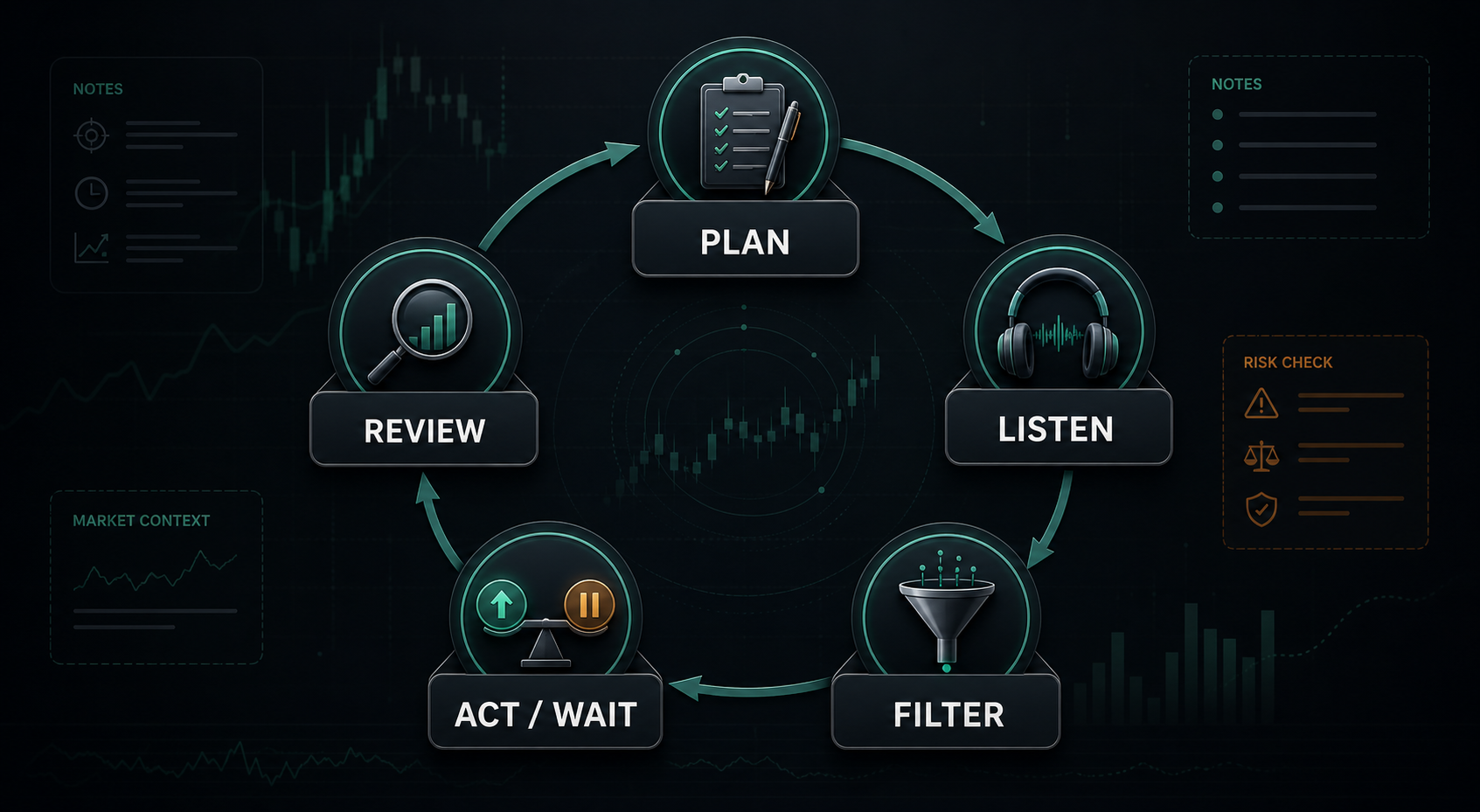
The satisfaction versus outcome split
Satisfaction and outcome are not the same.
A buyer can be satisfied because the room feels active, helpful, supportive, structured, entertaining, educational, or motivating. Those are real experiences. They may justify a positive rating. But none of them equals verified trading performance.
Outcome is harder. A trader’s result depends on risk, size, timing, emotional control, experience, market conditions, and execution. A community can influence some of those inputs. It cannot control them all.
That is why the rating should be placed in the “satisfaction proof” bucket.
Satisfaction proof is valuable. It tells you people like the experience enough to rate it highly. But a trading buyer needs more than satisfaction proof. They need a behavior plan.
The behavior plan asks:
- How will I use the room?
- What problem am I trying to solve?
- What will I record?
- What would make me stop using it?
- How will I separate education value from trade outcome?
That split keeps you from treating reviews like a substitute for risk management.
Questions to ask before buying
Before buying, ask sharper questions than “are the reviews good?”
Ask:
1. What do I need the room to change? 2. Am I looking for live education or trade permission? 3. Can I pay $99/month without pressure? 4. Would I still value the room if I spent the first month mostly observing? 5. Do I know how I will take notes? 6. Do I have a risk rule before I enter? 7. What would make me cancel? 8. What would make me consider yearly later?
These questions turn the rating into a starting point.
If you cannot answer them, do not let the rating answer for you.
Related reading: Before You Buy Team Bull: 21 Questions to Ask Yourself; Jdun Monthly vs Yearly: Should You Pay $99/month or $999/year?.
How ratings fit the CTA
The CTA should not say, “the rating is high, so join.”
The honest CTA says: the rating is strong enough to justify inspection, and the caveats are serious enough to justify a monthly test.
That is the clean buying posture. You are not ignoring proof. You are not worshipping it either.
The monthly Jdun offer at $99/month is the lower-commitment inspection path. The yearly Jdun offer at $999/year may make sense after fit is proven. The Grizzly path at $99/month belongs in the comparison if you are choosing between live-trading styles.
Ratings help you decide whether to look. Fit decides whether to buy. Usage decides whether to stay.
FAQ
Does Team Bull’s 4.7 rating mean it is good?
It means many visible reviewers rated the product positively. That is a useful satisfaction signal. It does not prove your personal trading outcome.
Should the 5% one-star rating stop me from buying?
Not automatically. It should make you ask what bad fit looks like and whether your expectations are realistic.
Are reviews enough to choose monthly or yearly?
No. Reviews can justify inspection. Monthly versus yearly should be decided by fit, usage, and commitment confidence.
What should I read next?
Read the full review, the complaints article, and the buyer readiness scorecard before deciding.
Final decision rule
Use this sentence:
“I am using the 4.7 rating as a reason to inspect Team Bull, not as proof that I will get a result.”
If that sentence is true, inspect the monthly Jdun offer here: https://whop.com/team-bull-trading/team-bull-trading?a=digitalartlab
Compare the broader review here: Team Bull Trading Review: What You Actually Get Before Joining.
Trading involves risk. Treat ratings, reviews, live trading, commentary, and community discussion as education and research inputs, not promises of profit or personal financial advice.